Heirloom Tomatoes
Tomato Colors
Tomato colors are kind of tricky; red isn’t the only color in the pallet. If you’ve spent any time with seed catalogs or read any books on tomatoes, you’ll see references to yellow, pink, orange, bicolor, striped, green, purple, chocolate, white and black. And now the pallet includes blue/indigo!
Still, the colors aren’t necessarily obvious. Nor do the same varieties of tomatoes grown in different climates have the same color. What’s a home gardener to do?
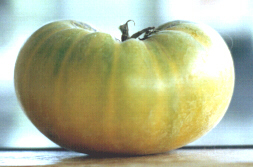
Evergreen Green Tomato, Ripe
Notes on Color
In general, tomato fruit colors are more vivid in warm climates than the cooler climates. While it doesn’t always hold true (many reds, pinks and yellows are bright no matter where), others need warmer weather to color up.
Conversely, tomatoes like the white varieties need cooler weather to retain most of their white/ivory color. Grown in the sunny South, they’ll end up more yellow.
The shades that really need warmth to reveal their depth of color are the purple, chocolate and black tomatoes. If you grow these in the cooler climates, you may be disappointed as to the paleness of the colors of the ripe fruits, compared to what you see online or in catalogs (which tend to be grown in warmer climates).
Tomato Colors
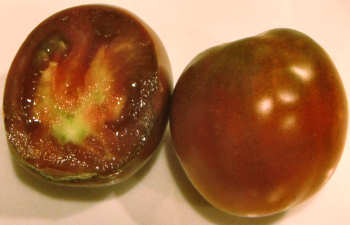
Black Prince Tomato
The fruit colors are as follows:
- Red: No real need to explain this, as it’s what you see in the grocery store. Red tomatoes have red interiors and yellow skin.
- Pink: These are tomatoes with a red interior but clear skin; therefore, they appear pinker than the reds.
- Purple: Generally a richer, dusky pink, both skin and flesh.
- White: I have yet to see a white tomato (in my climate anyway) that stays white when ripe. They start out that way, but then develop ivory to light yellow tones. The best chance for a white tomato to stay almost all white is one grown in a cooler climate, and shaded by a lot of leaves.
- Yellow: A clear, lemony yellow, both inside and out.
- Gold: These are the tomatoes that start out as yellow, but turn a richer gold color when ripe.
- Orange: These are really orange-colored, although some are brighter than others.
- Green: The skin is mostly green when ripe, with an amber blush on the blossom end. The interiors tend to be an almost neon green.
- Chocolate: A dusky purple. If you’re not used to darker tomatoes, you might think these look very strange when ripe.
- Black: A much darker purple. Some people are put off by the color of the skin and flesh of a black tomato, but they really are very good!
- Bicolor: Generally these refer to the red and yellow colors. The interiors are usually a swirl of yellow and red — gorgeous when cut in half!
- Striped: Just as you might imagine, the exterior is striped. The interior is usually just one color though. Visually stunning!
- Blue (Indigo): A relatively new color, but not exactly blue. They have a lot of anthocyanin in their skins, and they actually can look rather blue when unripe. Then the blue color turns more of a dark purple as they ripen.
Quite a few choices, wouldn’t you say? As a special note, the more exotic colors are generally heirloom tomatoes. Hybrids tend to be in the red-pink-yellow range, with some orange and white thrown in for good measure. Naturally, there are exceptions (there are quite a few indigo hybrids popping up).
Do the Different Colors Taste Different?
There are no hard-and-fast rules as to correlating tomato color to tomato taste; it really depends on the tomato variety and the growing conditions.
That being said, some people think that:
- Green tomatoes taste “zippier”.
- Yellow, white and orange tomatoes have the reputation of being blander (although not necessarily bland). But there are plenty of them that are very tomatoey tasting!
- Pink and purple tomatoes have the richest tastes and creamiest textures.
- Black and chocolate tomatoes have a deeper taste, less sweet.
- Bicolor and blue/indigo tomatoes are kind of all over the place. Most are just nice.
- Red tomatoes are the most common and range from bland (usually the store-bought ones) to very rich and luscious.
But like I said, it really does depend on the variety you grow. Not all tomatoes of a different color are alike!
Homegrown Tomato Shapes
Shapes for homegrown tomatoes may surprise you, if you’ve never grown them before. While some varieties may look like the unblemished round globes you see in the grocery store, many won’t look like that. On the other hand, looks can be deceiving, because even if the homegrown tomatoes don’t look as perfect, they taste soooo much better!
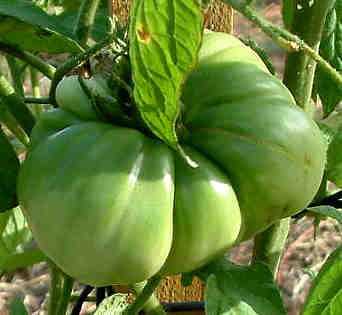
Brandywine Tomato
Tomato Shapes
First, different tomato varieties have different shapes. Some are round, some flattened. Some are smooth, others are ribbed. Not to mention there are varieties selected for their unusual shapes — sausage, pear, pleated, heart-shaped, etc.
Next, the conditions under which the tomatoes are grown can effect the fruits. For example, tomatoes that grow too fast may end up cracking. To much variation of the water level (letting them get too dry then giving them too much water) can affect the fruits, too.
Different tomato diseases can affect the fruits — anywhere from slightly “off”, all the way to the tomato is a loss.
And then there are the rogue tomatoes that just want to grow their own way, for their own reasons. 🙂
Ribs and Shoulders
As I mentioned previously, some tomatoes (especially heirlooms) just don’t grow round. They may have a lot of ribbing (pleats) around the shoulders (the end nearest to where the fruit connects to the plant).
Speaking of shoulders, they may not turn colors — sometimes the shoulders of an otherwise red or pink tomato stay green, even when ripe.
Homegrown Tomatoes May Not Be Perfect Looking…
No, your homegrown tomatoes may not look perfect, like what you see at the grocery store. But while what sells in the stores might be their looks, you can’t tell the taste until you bite into it (which isn’t appropriate in the store).
On the other hand, even if your garden-grown tomato is homely-looking, it likely tastes fabulous! And really, that’s the reason you are growing them — for the wonderful taste.
Tomato Varieties for the Southeast
Tomato varieties for the Southeastern USA are pretty wide-open for most locations, but there are certain considerations. I thought I’d start some posts about tomato varieties well-suited for different locations around the USA. And this, my first post, is on the Southeastern USA.
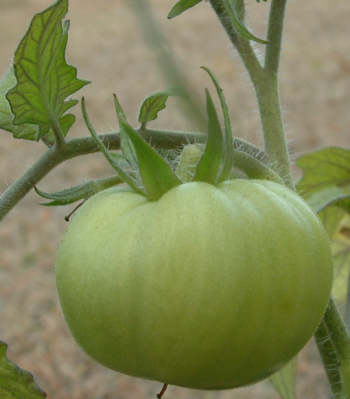
Celebrity Hybrid Tomato
What is the South East?
Well, here are the boundaries I’m considering the Southeast:
- South of Virginia on the eastern seaboard
- East of Texas
- South of Kentucky in the middle part of the USA.
- I’ll include Arkansas, but exclude Missouri.
So now that we know the boundaries, what tomato varieties are good for this area? Let’s consider the two things common to Summer in most of these locations.
Heat. Humidity.
While a little of both are great for growing tomatoes, too much of a good thing spells bad news for your eventual fruits. So what kind of problems do the heat and humidity cause in the Southeastern USA?
Yikes! There’s a Fungus Among Us!
Unfortunately, fungus thrives in humid locations without good air circulation. Diseases related to fungal infections include alternaria, blights, gray leaf spot, fusarium wilt, damping off, verticillium wilt, mold….you get the idea.
If you are finding a lot of fungal infections in your plants, you’ll want to at least think about some hybrid tomato varieties that are more resistant to these problems. You’ll recognize them by the letters after the tomato name; they include:
- A – alternaria
- F – fusarium wilt strain I
- FF – fusarium wilt strain I & II
- V – verticillium wilt
So for example, if you look at the description for the tomato variety called Big Beef, you’ll see the letters VF1F2TNA, which means the tomato is resistant to alternaria, both strain 1 and 2 of fusarium wilt, verticillium wilt, tobacco mosaic virus (the “T”) and nematodes (the “N”).
Other hybrid tomato varieties with good fungal resistance include:
- Applause (ASCF1F2StV)
- Celebrity (VF1F2NTASt)Â (one of my favorite hybrids)
- Country Taste (F1F2TV)
- Fabulous (VF1F2TASt)
- Razzleberry (VF1F2)
So this gives you an idea of what to look at when evaluating one of the tomato hybrids. (In addition to taste, of course.)
Other Tomato Diseases
Unfortunately, fungal diseases aren’t the only ones to threaten our homegrown tomatoes. We also have to worry about bacterial diseases (bacterial speck, spot, wilk, canker, fruit rot, etc.). And if that wasn’t bad enough, we have nematodes and viral diseases. It’s a wonder that we have any tomatoes at all!
The chances of bacterial diseases can be greatly reduced by careful mulching, as it’s the bacteria in the soil that causes problems. Nematodes…well, if you have them in the soil, the best thoughts would be to either plant your tomatoes in containers (using potting soil) and/or plant hybrids that are resistant to nematodes. Viral diseases can also be present – yikes!
(You may want to read the post on tomato diseases to become more familiar with these banes to growing tomatoes.)
What About Heirloom Tomatoes?
Sure, you can grow heirlooms! Just keep in mind that because they since they don’t have all those extra letters after their name, you’ll not know right off the bat what kind of resistance a variety has. You’ll need to be more on the lookout for any problems. Make sure your plants have plenty of air circulation (without being too windy), mulch the soil and consider growing in containers if you have a problem with nematodes. Oh, and don’t splash water on the plants when watering.
If you live in a location where it’s hot but not necessarily humid, you have more wiggle room in the summer. But of it’s really hot, you’ll want to pick tomato varieties that set fruits when many days go well over 90 degrees. The big beefsteaks are usually a little more trouble in this respect, compared to the tomatoes which grow to be less than 8 ounces.
Heirlooms that seem to do well in the southeast heat and humidity are:
- Cherokee Purple
- Black Krim
- Black Prince
- Bradley
- Clear Pink Early
- Matina
- Just about any cherry tomato
Where I live in South Florida, I try to grow most of my heirloom tomatoes on the “shoulders” of the season. In other words, I do my best to avoid having the fruit trying to set between mid-July and mid-August, when it’s the hottest. This may mean starting the seeds earlier than normal so I can get the seedling plants outside at the first possible moment.
Growing Huge Tomatoes
Are you interested in growing huge tomatoes? Would you like to see massive tomatoes on your vines? What about large volumes of tomatoes — lots and lots and lots from a single plant?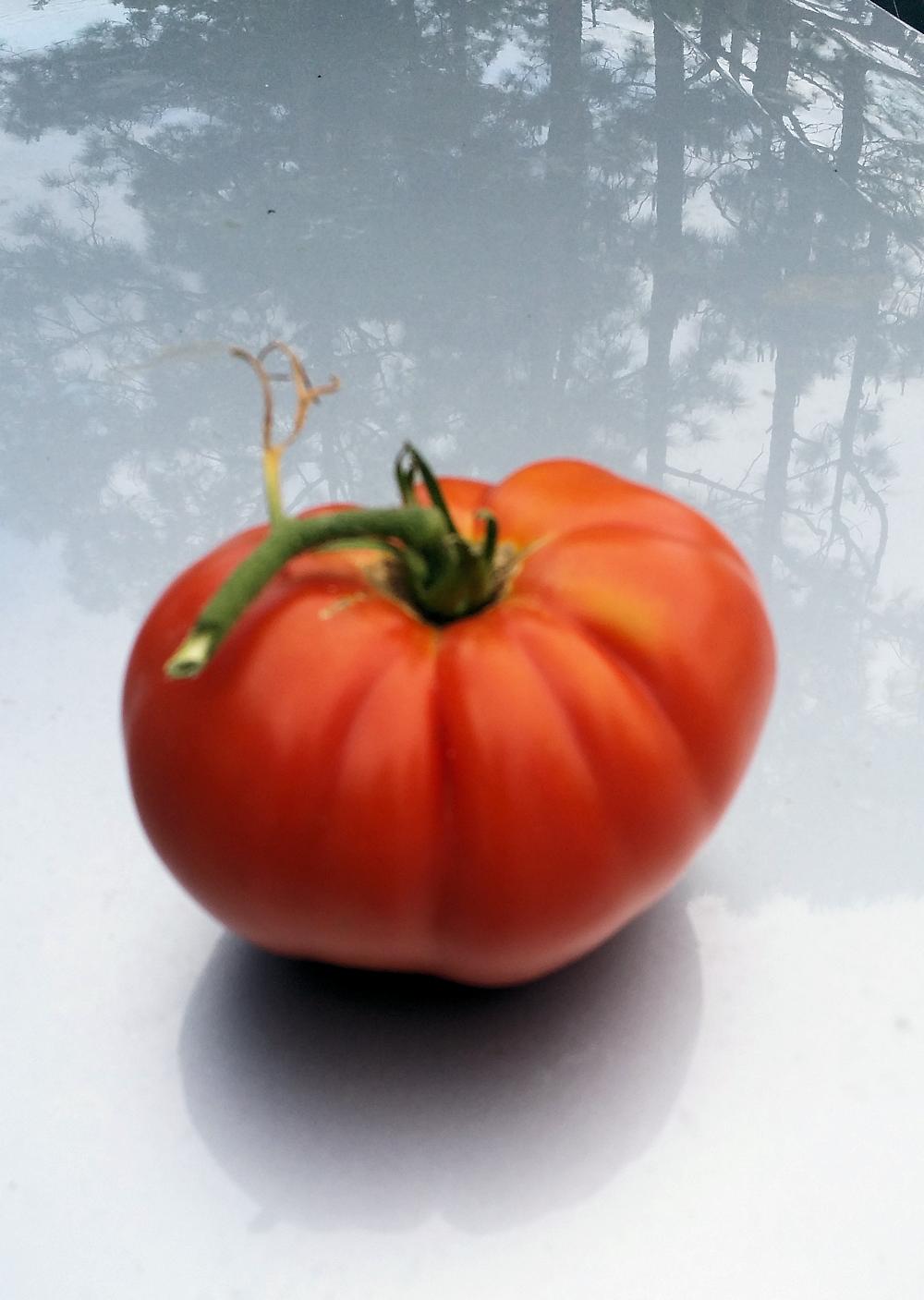
Two books have gotten my attention lately, and have intrigued me. One is about taking a tomato plant to new heights (both literally and figuratively) of production, and the other is growing humongous tomatoes.
Sound interesting? Well, if you grow tomato plants, you surely want good production — lots and lots of delicious fruits, ready when you need them (not to mention plenty to turn in to sauces with still plenty enough to give away).
And you’re likely fascinated with those huge tomatoes, weighing in at several pounds each! Each tomato is a meal in itself for several people; they are simply amazing.
The Great Tomato Experiment
With the tomato-growing weather great in my part of the country right now, I’ve decided to put the two books to the test. I’ll grow three tomato plants of the same variety, from the same seed packet.
- One tomato plant will be the control plant; I’ll grow it just as I normally do.
- One tomato plant will be grown according to the directions for the high tomato productivity.
- The final tomato plant will be grown according to the directions for making those humongous tomatoes.
The tomato variety I’ve chosen for this test is a heirloom tomato named Pineapple. It”s a bicolor, with red and gold stripes, outside and inside. Not only is it pretty to look at, but the fruit is delicious and sweet. Oh, and the tomatoes it produces pretty regularly get to be a pound or more in size. Pineapple is also a bit more disease-resistant than most heirloom tomato varieties, but like most heirlooms is indeterminate.
So, it sounds about the perfect tomato for the test, wouldn’t you say?
Hey, why not join me? Experiment right along with me if you live in the south. If you live farther north, get your seeds, books and supplies now, and run your own experiment as soon as your weather turns mild enough.
First, the Books
OK, here are the two books you’ll need for this Great Tomato Experiment. They are:
- How to Grow World Record Tomatoes: A Guinness Champion Reveals His All-Organic Secrets by Charles Wilber
- Giant Tomatoes by Marvin H. Meisner; M.D
The first book is about growing lots and lots of tomatoes. How many? Charles Wilber managed to grow over 1,000 pounds worth of tomatoes…from just four plants! While I don’t expect to grow that many, you can see what I mean by growing lots of tomatoes! My goal will be to at least double the tomato productivity of the control plant.
The second book is about growing those giant tomatoes that are heavy and huge. Can you imagine a tomato that dwarfs two hands? The tomato variety I’ve selected is already known for growing large tomatoes, but my goal is to have the tomatoes substantially bigger than the largest tomatoes on my control plant.
Next, the Seeds and Supplies
First are the seeds for the heirloom tomato called Pineapple; you’ll need a pack of these seeds for the experiment. (If bicolors aren’t your thing try Kellogg’s Breakfast.)
Next is a tomato trellis, which helps to hold up the tomato plants. I’ve selected the Tomato Tower with Nylon Trellising for both the test plants. For my control plant, I’ll use the staking system I normally use. The tomato tower is 6 feet tall, and is designed to better support the larger tomato plants, not to mention the larger tomatoes!
After that, I’ll be using the soil and fertilizers specified in each of the books for the appropriate plants.
So, below are the items I’ll be using. The two fertilizers you see are for my control plant (i.e., what I normally use). I put in the windowsill greenhouse as well, as it’s what I use for the germination phase for any tomato.
- Terracycle Tomato Fertilizer
- Sea Magic Fish Fertilizer
- Windowsill Greenhouse
- Pineapple Tomato Seeds
- Kellogg’s Breakfast Tomato Seeds
So, come on and join me — let’s have fun growing lots and lots of big, tasty tomatoes! The seeds, supplies I’m using are listed below; put your cursor over an item to get more information and/or buy it.
P.S. Don’t think you can’t follow right along with the experiment because you don’t have a yard in which to grow tomatoes — I’m growing each of my three plants in containers! But if you can (and choose to) grow your tomato plants in the ground, you’ll likely have even bigger yields. Wow!
Heirloom Tomato Seeds
Heirloom tomato seeds aren’t any more difficult to plant than hybrid tomato seeds. The trick is finding the seeds you want to grow — and there is quite a variety!
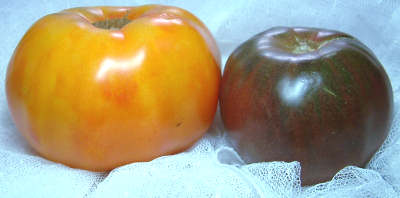 But before I talk more about the seeds, let’s talk a little about what makes an heirloom tomato an heirloom.
About Heirloom Tomatoes
So what exactly is an heirloom tomato — what makes it different than “regular” tomatoes?
First of all, heirlooms are produced naturally from seeds. In other words, if you save seeds from an heirloom, the resulting plants will be just like the parent. Not so with a hybrid tomato, because you’ll never know what you’ll get! This is because a hybrid is a cross between two varieties, neither of which may be great on their own (but wonderful together).
So that’s one; an heirloom produces plants like itself. The next is how long the plant has been producing tomatoes; that is, how many generations have been produced with consistent results. I’ve heard quite a few different numbers — 100 and 50 seem to be the two that pop up the most. Some people use the year 1945 as the cutoff; if the tomato variety was growing in 1945 with consistent fruit results, the plant can be considered an heirloom.
One other thing about heirloom tomatoes is their taste! In general, the heirlooms produce fruits with a full, rich tomato taste. Many of the heirloom varieties produce big fruits — beefsteak or larger. If you love tomato sandwiches, you’ll love these tomatoes.
There is one downside, though. Heirloom tomatoes are pretty strong growers, but they are not necessarily disease-resistant. So especially if you live in a hot and humid climate, you need to keep a closer eye on your heirlooms. (But it is worth it!)
Heirloom Tomato Seeds
There are tons of varieties or heirlooms out there, and I’ve tried many of them in my day. But I keep coming back to a few that are tasty, but that also have fun results! I like red tomatoes for sure, but I also get a big kick out of the purple and the striped tomatoes. That being said, here are a few of my favorite heirloom tomato varieties.
Brandywine Pink: Whenever I ask my husband what tomatoes he’d like me to grow, Brandywine always tops the list. I love the big fruits and the juicy meat of this heirloom tomato. The seeds germinate fairly quickly and transplant easily. The problem for me, though, is that it just isn’t a prolific producer of tomatoes in hot and humid climates. I get maybe one fantastic tomato (huge), a couple medium-sized and maybe one or two small ones. When it gets really hot and humid, no more tomatoes. But for taste…I don’t think I’ve had another variety beat it (yet). Brandywine Pink is an indeterminate potato-leaf plant, mid to late season. And be warned — the plants can get huge.
Cherokee Purple: This is a fun tomato because it’s purple! OK, it’s not the kind of bright purple you might be imagining; it’s more of a dusky violet. The name comes about because it’s believed to have originated among the Cherokee people, and is over 120 years old. These are big tomatoes, which seem to average between 10 and 12 ounces. Sweet and meaty, they are great for salads and sandwiches. But the purple does take a little getting used to. Thin-skinned, you will need to eat these soon after picking. Cherokee Purple is an indeterminate tomato that is mid-season.
Kellogg’s Breakfast: This is an orange beefsteak tomato. Now orange tomatoes have the reputation of being milder-tasting, but not so with Kellogg’s Breakfast — it has a full-on tomato taste! I’ve grown it in the ground and in (big) containers — grew well both ways. The tomatoes were big and the plants were surprisingly prolific for such a large beefsteak. Kellogg’s Breakfast is an indeterminate regular-leaf tomato, and the plants can get very large. There is also a Kellogg’s Breakfast version (KBX) that is potato-leaf plant, but I have never grown it. Mid-season.
Red Pear: I cannot resist these cute little tomatoes! Cherry-sized, perfect for salads or garden snacking (the fate of most of mine – few actually make it into the house). As you may guess, they are pear-shaped. Not the sweetest, but it is tasty and does tend to be prolific! The plants I have grown tended to be manageable in size, and grew well in the ground and in a container. Indeterminate, regular leaf, mid-season.
Big Rainbow: The last of the heirloom tomato seeds I’ll talk about today is one that bears monster fruits — Big Rainbow. It’s also a striped tomato color, with gold and red, so it’s very pretty to look at. Not to mention great to eat! This heirloom tomato can get fruits up to 2 pounds in size! Naturally that’s with optimum growing conditions, but 1+ pounds tomatoes can be expected on average. This tomato is also exceptional in that it’s one of the more disease-resistant of the heirlooms. (Reason enough to grow it.) Big Rainbow is an indeterminate, requires strong staking (possibly multiple stakes). It bears fruit roughly 90 days out, so only think about growing it if you have a long growing season.
So there you go; some wonderful heirloom tomato seeds for you to consider planting. For additional information on planting, check out the post on planting a tomato garden.